Friday, October 3, 2014

Sketchbook assignment #1

Sketchbooks have been handed out and so has the first assignment:)

The assignment, IDENTITY is open to interpretation and can be conveyed in any media you choose, ie collage, graphite, photography etc.  It asks the question, who are you?
Be very thoughtful in your response. 

Sketchbooks are due:
Howard 10/28
Delcastle 10/29
...

IDENTITY

What is identity? Webster's dictionary states identity is "the distinguishing character or personality of an individual. Identity begins with our names, addresses, family groups, and cultural backgrounds, but how does it grow from there? Is identity how we see ourselves or how others see us? Is identity what we are or what we would like to be? Do we form our own identity or do others form it for us? Can identity be changed? Why is it important to express our identity?

Discussion, Articles & Artists of Inspiration
(click on artist name to find out more about how their work relates to the notion of IDENTITY)

Which Artist do YOU Identify With? 
How Do YOU plan on approaching this assignment?
Let's start the discussion in comment section below...

 CAC Pinterest Board, Identity


Romare Bearden


Thursday, October 2, 2014

Elements and Principles


ELEMENTS:  The building blocks of Art


Principles:  How those blocks are put together


Printable Exercise:


Printable Workbook
http://www.incredibleart.org/files/elements.htm

Project Planning Sheet with Elements and Principles of Design

Use the following questions to help you better formulate your next independent project:


What elements of design will be used in your project?
 
Line
 
Shape

Form
 
Space
 
Value
 
Texture
 
Color
 
What is your subject?


Principles of Design
 
Written statement/ Drawing
 

How are you going to establish Balance?


What is your Emphasis in this Project? How will you establish Emphasis?


How will you establish Movement?


What type of Pattern will you create?


How will you establish Rhythm?


How will you establish Contrast?


How will you create Unity?


Write a brief statement that explains your objectives for this project. What do you want this piece of art to say?


http://www.incredibleart.org/files/elements.htm#sthash.yhZkriNN.dpuf


Sunday, September 21, 2014

Artist Trading Card SWAP: CAC Wk. 6 and beyond...


WHAT ARE ATCs?
 
Artist trading cards (or ATCs) are miniature works of art about the same size as modern trading cards baseball cards, or 2 1⁄2 by 3 1⁄2 inches and small enough to fit inside standard card-collector pockets, sleeves or sheets. The ATC movement developed out of the mail art movement and has its origins in Switzerland.  Cards are produced in various media, including dry media (pencils, pens, markers, etc.), wet media (watercolor, acrylic paints, etc.), paper media (in the form of collage, paper-cuts, found objects, etc.) or even metals or fiber. The cards are usually traded or exchanged. When sold, they are usually referred to as art card editions and originals (ACEOs).
http://en.wikipedia.org/wiki/Artisttradingcards

  • ATCsForAll.com: Trading Site
  • IllustratedATCs.com: Trading Site
  • ATC Quarterly
  • Trading Card Questions
  • Original Art Trading Society (OATS)

  •  Steps

    Getting started with your own ATCs

    Thumbnails:


    1. Start with the size in mind. Artist trading cards are 2 1/2 by 3 1/2 inches. This is the size of playing cards and other trading cards. You can even start with mismatched playing cards as a base for collage or altered item artwork.  I will also have pre-cut cards for you to use.
       
    2. Cut the background material to size. If you choose to use a background material, you may start by cutting card stock or heavy paper to size. A paper cutter, if you have one, will help you make square, straight cuts quickly.
    3. Choose your media. If you work in another medium, such as leather or fabric, you may either cut it to size or work so that the finished result is the correct size.
    4. Express yourself or show your style, using your preferred medium or media. If you can do it inside of 3.5 x 2.5 inches, you can make an ATC.
      • Drawing and painting are easily done at this size, but so are plenty of other arts, including quilting, photography, crochet, leather work, metal work, and collage. The possibilities are LIMITLESS!

    5.  Work somewhat quickly. You don't need to be careless when making an ATC, but there's no need to work your masterpiece in miniature, either. ATCs should be simple pieces that you're willing to give away when you're done.

    6.  Make lots. You'll need a selection of cards. Remember that you will be giving your cards away. "Lots" can be relative. It could be half a dozen or a few dozen, depending on how many you expect to trade.

    7.  Show your style. Is there a particular palette or medium you prefer or a technique you've been exploring lately?  Make YOUR card stand out!                                                                                                                                                                Photography-based ATC Exhibition 
    8. Artist Trading Card Template for back of ATC's.Sign & Title your cards and attach information on the back.  On the back the artist will title the work, list the media, and can include their first name and grade/age.  The title is optional, but it will give your recipients or viewers a context in which to view your work.  Here is an example:  


          9. Share. The whole point of ATCs is to trade with other artists, so once you have a selection 
              of cards, trade them.
     
     
    CAC will be trading with:
    Lawrence Free State High School in Kansas
    http://fshs.usd497.org/
     
     
                     OTHER WAYS TO SHARE/TRADE:
      • Find artists or groups in your area that trade cards.
      • Attend gatherings of artists in your area, and remind them to bring ATCs to share.
      • Carry them with you as you would business cards, so that if you find an occasion to trade or give away a card, they are with you.
      • Spread the word. If your local artist community is unfamiliar with artist trading cards, you may have to give away a few cards or offer them with a request for one in return before you get many back.
      • Organize a gathering to swap ATCs. Let people know what ATCs are about, and get together to try trading some.
      • Look on-line. There are on-line groups that will match you up with others the world over who can mail cards in exchange for yours.
        10. Collect others' ATCs.
     
     
    WHO ARE WE TRADING WITH?
     
    Michelle Salmans & Rachel Downs-Blair lead the Art Club at Lawrence Free State High School in Kansas.  Lawrence is a city of just under 90,000 which houses the University of Kansas, about 40 miles west of Kansas City and 25 miles east of our state capital, Topeka. 

    *Fun Fact: Ms. Downs-Blair presented about ATCs at NAEA a few years ago and is a huge advocate and knowledge house for the process.

    LINKS:

              Lawrence Free State High School:  http://fshs.usd497.org/
              Rachel Downs-Blair:  http://downs-blair-art.tumblr.com/
              Michelle Salmans:  http://salmansinart.weebly.com/

    WHEN ARE WE GETTING STARTED?

              OCT. 14th & 15th


    WHEN ARE WE TRADING?
     
              I plan on making two bulk mailings, one before Winter break and another in the Spring.
     
              DATES: TBD, Before Winter Break


    Last Days of Summer


    As Fall bursts in, my toes are surely missing the sand...


    Turning-Clouds-into-Magical-Mythical-Characters-1
     
    If you are also sad to see summer go, here are some big fluffy clouds to gaze at  :)


    Turning-Clouds-into-Magical-Mythical-Characters-20
     
    Turning-Clouds-into-Magical-Mythical-Characters-19
     
     
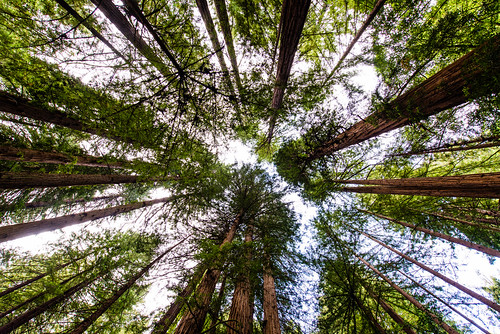
    Muir Woods
    So, as the leaves begin to change, don't forget to LOOK UP...


    The most interesting thing about this art, though, is Simon creates it knowing it could be gone the very next day.
    Because Winter is right around the corner...

     Simon Beck Snow Art


    Thursday, September 18, 2014

    ELEMENTS & PRINCIPLES OF ART: EMPHASIS & PaTtErN The Art of GustavKlimt: CAC Wks. 3, 4, & 5


    Artist of Inspiration:  Gustav Klimt

    The Kiss, Gustav Klimt

    Notice the juxtaposition of the abstract patterning and the realistic figures.


    Pattern from tvd

    THE PROJECT:

    Looking at the work of Austrian Art Nouveau painter, Gustav Klimt for inspiration we will create elegant collaged scratchboard portraits. Line, shape, pattern, and the design principle known as Emphasis are the focus of this lesson.
     
    Utilizing Klimt's trademark gold color and intricate pattern work, we will create inspired designs on Gold scratchboard.  Patterns applied to areas around a carefully cut out figure from a magazine becomes the signature Klimt look and the focal point in the design. This is accomplished by establishing contrast between the pattern work in the figure and in the background.


    Procedures:
    • From a magazine, cut a photographic human figure (no text obstructing) out very carefully. Place the figure down on the scratchboard and lightly trace with pencil. The head, hands, legs (any skin) of a human figure should then be cut out, removing and discarding any clothing or accessories. Glue these pieces to the gold scratchboard (Note: Self portrait digital images could be used.)
    • Begin by scratching out an organic shape that suggests a garment. This garment dos not need to be realistic and may vary from the original silhouette.
    • After you draw the garment you will have two areas to fill... the garment and the background/negative space around the garment.
    • One of these areas must be densely and richly patterned using lines and textures. The other area will be covered less densely. This will emphasize one area more than the other.
    • Keep the unscratched area of the scratchboard covered with a clean sheet of paper to prevent oils from your fingers transferring to the surface of the board.
    • Begin to fill one of the two areas with patterns, lines, textures and shapes.
    • Fill the other area.
    • Check to see if the two areas are distinctly different. Does one stand out more than another?  If they are too similar, go back and add more details to the dense shape.
    . 


    .
     
     
    More Resources:

    See the Klimt Exhibition in Venice from 2012: http://www.mostraklimt.it/

    Gustav Klimt - Web Museum: http://www.ibiblio.org/wm/paint/auth/klimt/

    Expo-Klimt - Online Museum: http://www.expo-klimt.com/

    (Archive) Gustav Klimt - Artchive - essay and links to images: http://www.artchive.com/artchive/K/klimt.html

    Gustav Klimt Landscapes from Clark Art Institute:
    

    Instagrammmmmm

    Instagram's the new shopping mall; it's where all the cool kids are hanging out. But in a sea of selfies and mediocre sunsets on the beach, how do you find the teens with the coolest Instagram pages? We've (Huffington Post) saved you the trouble and gathered some of the best teen Instagrammers the Internet has to offer.
    via Huffington Post


    1. Ryan Parrilla, @novess
    This 15-year-old New York-based photographer has already caught the eye of nearly 48k followers with beautiful shots of nature and city life.

    2. Jules Spector, @jules.spector
    Fourteen-year-old Jules is already a feminist activist, working as a teen advisor for the @girlupcampaign and blogging at Teen Feminist. Her Instagram tracks her travels and activism.
     
     
    3. Mark Otto, @markotto
    Ohio teen Mark Otto shows high school life in bright pop colors. Everyday knick-knacks transform into instant art!


    Read on